 How to resolve AdBlock issue?
News
Informational and referral services accessible through 211 and at 211lake.org.
LAKE COUNTY, Calif. – Feb. 11 is 211 Day, a time to recognize 211 as a trusted, go-to resource that helps connect Lake County residents with essential services and support during times of need.
Throughout the past year, trained 211 Navigators assisted individuals and families by connecting them with locally available resources, including help with housing stability, food access, utility assistance, health care and other vital services.
The service supports both immediate needs and longer-term challenges, helping residents navigate complex systems and identify available options in their community.
Officials said 211 is a free, confidential, 24-hour information and referral service that connects people with health and human services.
Residents can dial 211 to reach a trained navigator who listens, assesses needs and provides referrals tailored to each situation.
Support is available by phone, text, online chat, and web search, making it easy to access help in a way that works best for each individual.
The service offers access to a wide range of information, including health and mental health resources, health insurance programs, support for older adults and people with disabilities, food and nutrition programs, transportation options, and services for children, youth and families.
The 211 service continues to offer a vital connection point between residents and community-based organizations, helping ensure that support is accessible, timely and confidential.
If you or someone you know needs help, dial 211, visit 211Lake.org, or text your ZIP code to 898-211.
Assistance is available 24/7, in multiple languages, and at no cost to the caller.
MIDDLETOWN, Calif. – The Middletown Area Town Hall, or MATH, will meet this week to discuss its leadership, a south county glamping project and goals for the coming year.
MATH will meet at 7 p.m. Thursday, Feb. 12, in the Middletown Community Meeting Room/Library at 21256 Washington St., Middletown. The meeting is open to the public.
Zoom will not be available. Viewers can participate via PEG TV at www.youtube.com/LakeCountyPegTV.
On Thursday, MATH will discuss new board and executive board appointments, including the positions of chair, vice chair and secretary.
In other business, MATH will take up a request for review from the Community Development Department for Guenoc Valley Glamping Project located at 21000 Guenoc Valley Road.
There also will be discussions about the Lake County General Plan and Middletown Area Plan, and planning for MATH’s 2026 goals.
MATH – established by resolution of the Lake County Board of Supervisors on Dec. 12, 2006 – is a municipal advisory council serving the residents of Anderson Springs, Cobb, Coyote Valley (including Hidden Valley Lake), Long Valley and Middletown.
For more information email
Email Elizabeth Larson at
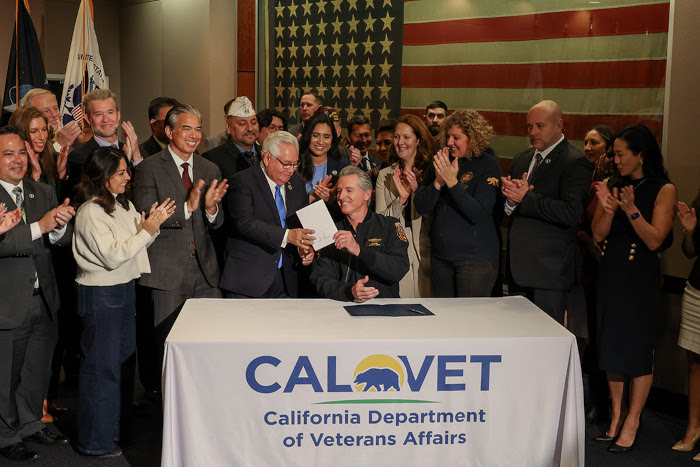
Gov. Gavin Newsom on Tuesday signed landmark consumer protection legislation to crack down on fraudulent practices targeting veterans and service members navigating the federal benefits system, strengthening California’s nation-leading protections for those who served.
For years, lax federal enforcement allowed predatory claims businesses to flourish nationwide — with unaccredited operators charging illegal and excessive fees while misleading veterans seeking help with U.S. Department of Veterans Affairs benefits. The new law puts a stop to these benefit-stealing scams, establishing clear guardrails, oversight, and enforcement to protect veterans from being exploited.
The legislation builds on California’s comprehensive commitment to veterans — including a new $20,000 state income tax credit, signed into law by Gov. Newsom and taking effect this year — putting real money back in veterans’ pockets while protecting them from fraud.
“We owe our veteran community a debt of gratitude – for their years of service and sacrifice. By signing this bill into law, we are ensuring veterans and service members get to keep more money in their pockets, and not line the coffers of predatory actors. We are closing this federal fraud loophole for good,” said Newsom.
By signing SB 694 by Sen. Bob Archuleta (D-Pico Rivera) into law, California is providing additional protections for veterans by limiting who may charge fees for assistance with benefits claims administered by the federal government and by strengthening consumer protections under California law.
Key provisions of the bill include:
Requiring federal accreditation before any person may prepare, present, or prosecute a veteran’s claim for benefits.
Prohibiting unauthorized fees, except as expressly allowed under federal law, and expanding the California Consumer Legal Remedies Act to cover veterans’ benefits claims.
Protecting veterans’ privacy and security by prohibiting the sharing of login credentials, access to secure government systems using another person’s credentials, or requiring veterans to provide PINs associated with Common Access Cards.
“It’s been a long road, but Senate Bill 694 will finally provide a framework to protect our veterans from being defrauded when seeking assistance to apply for the benefits they deserve from the VA. I want to thank Senator Archuleta for his hard work on this important issue, and Gov. Newsom for signing SB 694 into law,” said Senator Sabrina Cervantes (D-Riverside).
“I am grateful to Gov. Newsom for his leadership in fighting for one of the most vulnerable populations in our state,” said Sen. Archuleta. “With SB 694 California emboldens its promise to stand up for veterans ensuring they aren’t exploited for profit by predatory companies. This new law builds on the principle that veterans should not be charged, much less gouged, when seeking assistance for applying to their disability benefits which they rightfully earned in the service of their country,” said Senator Bob Archuleta (D-Pico Rivera).
“As chair of the Assembly Military and Veterans Affairs Committee and the daughter of a disabled veteran, alongside so many, we fought to protect disabled veterans from illegal fees charged by predatory claims sharks. Veterans who earned their disability benefits through service and great sacrifice deserve every penny, and with the governor’s signature of SB 694, we are making it clear that California will always protect our veterans and hold these predatory corporations accountable,” said Assemblymember Pilar Schiavo (D-Santa Clarita).
California has one of the strongest veteran support networks in the nation, including County Veteran Service Officers (CVSOs) who provide free, federally accredited assistance to veterans statewide. In 2024-2025, they filed 316,000 claims, securing an estimated $687 million in new or increased federal benefits for California veterans and their dependents. In that same year, CVSOs served nearly 1 million veterans and family members throughout the state in person, by phone, and email.
However, the absence of federal penalties have allowed predatory actors to target veterans across the country.
“Today, I am proud to stand with a coalition of veterans organizations in celebration of the signing of SB 694, legislation that continues our commitment to vigorously protect those who have sacrificed so much to protect us," said Attorney General Rob Bonta. “Claim sharks pose a financial risk to veterans who need help with their benefits claims. SB 694 will degrade and deter the ability of these predatory individuals or companies to exploit veterans seeking help accessing their benefits. I thank Senators Archuleta and Cervantes, and Assemblywoman Schiavo, for authoring this legislation and Gov. Newsom for signing it into law and making it clear: If you want to charge veterans for help with their benefits claims, you must be accredited by the VA."
“SB 694 is a major victory for California’s veterans and their families. For too long, bad actors have preyed on veterans seeking the benefits they earned, exploiting trust through false promises, illegal fees, and deceptive practices,” said the California Department of Veterans Affairs Secretary Lindsey Sin. “This law puts a stop to claims sharks and strengthens protections that ensure veterans can access help safely and with dignity. We’re grateful to Gov. Newsom for standing firmly with California’s veterans, and to the coalition of legislators, the County Veteran Service Officers and Veteran Services Organizations who led this effort.”
“As a Navy veteran, I know firsthand how complex navigating benefits can be—and how devastating it is when bad actors exploit those who served. This law sends a clear message: California will not tolerate fraud against veterans. Combined with the new $20,000 tax credit, we’re putting real protections and real dollars back into the hands of those who sacrificed for our country,” said Josh Fryday, GO-Serve Director and California Chief Service Officer.
Quality of life for military families
There are about 160,000 active-duty service members and nearly 1.5 million veterans who call California home. Through legislative action, budget investments and key partnerships, California continues to stand up for our esteemed military members and veterans.
Veterans tax benefit
As armed services personnel and families file for taxes this year, Gov. Newsom included a new state income tax break for military retirees and their surviving spouses. For the first time, veterans receiving military retirement pay and families receiving payments from the federal Survivor Benefit Plan will be able to exclude up to $20,000 of their income each year from state income taxes. This tax cut helps retain retired service members in the state, while strengthening California’s workforce and local economies.
Helping military-connected students
In 2025, Gov. Newsom also signed AB 88 and SB 67, which extend eligibility for the Cal Grant and Middle Class Scholarship Program to dependents of a member of the United States Armed Forces who maintains California as their state of legal residence. In addition, to reduce the burden on military-connected pupils and their families, the state is publicly recognizing and designating specific public schools as California Purple Star schools.
Giving back to our veterans
Through the California Department of Veterans Affairs (CalVet), the state provides resources and support to veterans and their families through state and federal benefits they have earned through their selfless military service.
Connecting veterans with services: The California Transition Assistance Program (CalTAP) informs separating service members and veterans about their earned benefits and connects them with local service providers. Since 2017, CalTAP has served over 12,000 service members and veterans across all major military installations and college campuses in California.
Tuition fees waived: The CalVet College Tuition Fee Waiver Program waives tuition fees at California public colleges and universities for children and spouses of qualified veterans, including those who are disabled, deceased, or 100% service-disabled. This covers attendance at California State University, University of California, and California Community Colleges. Gov. Newsom previously signed AB 1745 to expand eligibility by raising income caps for veteran dependents.
Providing home ownership: For more than a century, the Home Loans program has assisted nearly 450,000 veterans achieve the dream of home ownership, with one of the lowest foreclosure rates in the nation and at no cost to taxpayers.
Child care access: The Department of Social Services worked with the Department of Defense to implement the Military Child Care in Your Neighborhood Plus program, expanding access to civilian childcare for military families.
Veteran designation: Eligible veterans can add the word “VETERAN” to the front of their driver’s license or ID card to signify their military service. This designation provides easier access to veteran benefits and privileges without the need to carry a Certificate of Release or Discharge from Active Duty.
Pathway to citizenship: CalVet has helped more than 800 veterans and their families take an important next step after active duty – becoming naturalized citizens.
California’s Veterans Homes: There are eight veterans homes throughout seven counties statewide, which deliver top-rated care to more than 1,500 veterans through long-term residential and medical care for eligible veterans, their spouses and partners
Helping homeless veterans and improving mental health
Finding affordable homes can be extremely difficult for veterans, especially if they have experienced post-traumatic stress disorder, have suffered from a traumatic brain injury, or live with mental-health issues. Remaining stably housed can be even more difficult, especially without mental health support.
Prop 1, which was championed by Gov. Newsom and approved by voters in 2023, is supporting veterans and transforming California’s mental health systems with a $6.4 billion Behavioral Health Bond for housing, services, and treatment for veterans and people experiencing homelessness.
More than $2.1 billion of this funding is available for local Homekey+ projects. Homekey+ provides funding for local communities to build residential care settings and expand access to behavioral health treatment, with approximately 50% of the funding set aside for projects serving veterans.
In addition, through the California Veterans Health Initiative Mental Health Support Grant Program, $38 million in grant funding has helped families access free mental health care in urban and rural areas.
The Veterans Housing and Homelessness Prevention program helps develop new affordable housing specific for veterans and their families who are experiencing homelessness or have extremely low income. CalVet so far has awarded $580.5 million in permanent loan financing to 99 multifamily affordable, permanent, supportive housing projects through eight competitive rounds of funding.
As of October 2025, 75 projects have completed construction, with 5,190 units occupied or in the process of leasing. Once all awarded projects are built, California will have added 6,561 units of affordable, permanent supportive housing.
These strategies are working. In 2024, California achieved the nation’s largest reduction in veteran homelessness. In addition, California is outperforming the nation in reducing homelessness, with a 9% reduction in unsheltered homelessness in 2025.
Economic development and workforce initiatives
California is home to more than 30 federal military installations, with the U.S. Department of Defense directly employing more than 236,000 people in California.
California Jobs First: Designated space, defense, and satellite industries as top statewide economic priorities.
Military training: Created workforce pathways to translate military training into academic and professional credentials.
Economic success: Produced the California Military Economic Impact Study, delivering a data-driven assessment of the state’s defense economy and its $66 billion annual contribution. The report continues to inform statewide workforce, infrastructure, and investment strategies.
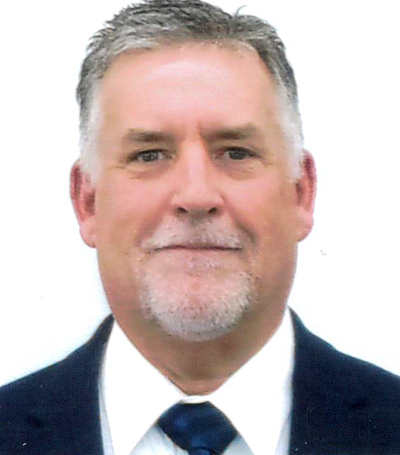
LAKE COUNTY, Calif. – The Lake County Superior Court announced that the swearing-in ceremony for its newest judge will take place this week.
Judge John Langan will officially join the bench when the ceremony takes place at 4 p.m. Wednesday, Feb. 11, in Department 3 on the fourth floor of the Lake County Courthouse, 255 N. Forbes St. in Lakeport. Light refreshments will be served.
Earlier this month, Gov. Gavin Newsom appointed Langan to fill the vacancy created by Judge Andrew Blum’s retirement in July.
Langan graduated from the University of San Francisco School of Law. He served nearly 18 years with the Lake County District Attorney’s Office before being appointed as the court commissioner in 2019.
“Judge Langan has extensive experience in criminal proceedings from his time at the District Attorney’s Office,” said Lake County Superior Court Presiding Judge Michael Lunas. “He also has been serving as a bench officer in civil and family matters since 2019. That vast experience as well as his intellect, even temperament and ability to efficiently handle a busy court calendar will make him an asset to the Lake County Superior Court.”
Langan told Lake County News that he’s ready to jump in right away, which is necessary in the small rural court that has a backlog of cases.
“It’s a tremendous honor. It’s also a tremendous responsibility, too. That’s hitting me right now,” he said of his appointment.
He said he couldn’t be more grateful to the courthouse staff with whom he works.
“I feel really blessed to be able to serve,” Langan said. “I will do my best to uphold the faith everyone has put in me.”
The swearing-in ceremony is open to the public.
Email Elizabeth Larson at
LAKE COUNTY, Calif. – A jury has convicted a Clearlake woman of first-degree murder in the shotgun killing of her boyfriend in their home.
On Friday, following a three-week trial, jurors returned the guilty verdict in the case of Dominique Irene Molina-Dominguez, 34.
Molina-Dominguez was arrested on July 10, 2024, on a charge of murder for shooting 38-year-old DeAndre Grinner to death at the 16th Street home they shared in Clearlake.
Police said Molina-Dominguez called in the shooting.
Authorities said at the time of her arrest that they believed Molina-Dominguez was lying in wait for Grinner, who she killed by shooting him once with a shotgun.
She’s remained in custody since the killing.
Chief Deputy District Attorney Rich Watson said jury selection started Jan. 14 and closing arguments for both the prosecution and defense took place on Feb. 4, with deliberations starting the next day.
Watson said the jury had a verdict by 11 a.m. Friday.
In addition to finding Molina-Dominguez guilty of first-degree murder, Watson said the jury also found to be true three enhancements or special allegations.
Those special allegations are causing great bodily injury with a shotgun, personally discharging a shotgun and use of a firearm in connection with a felony.
Judge Michael Lunas is scheduled to sentence Molina-Dominguez on March 3 in Lake County Superior Court’s Department 1.
Watson said it is difficult to know her potential sentence until after the Probation Department completes a sentencing report.
By statute, first degree murder is a 25-years-to-life on conviction, while the special allegation of use of a firearm in connection with a felony could add an additional and consecutive term of 25 years to life to the first degree murder term, Watson said.
Email Elizabeth Larson at
LAKEPORT, Calif. – The Lakeport Planning Commission will meet this week to discuss the latest on important city planning documents.
The commission will meet at 5:30 p.m. Wednesday, Feb. 11, in the council chambers at Lakeport City Hall, 225 Park St.
The agenda is available here.
To speak on an agenda item, access the meeting remotely here; the meeting ID is 814 1135 4347, pass code is 847985.
To join by phone, dial 1-669-444-9171; for one tap mobile, +16694449171,,81411354347#,,,,*847985#.
Comments can be submitted by email to
The commission’s main items of business involve key city planning documents.
Staff will give a presentation and the commission will discuss the city’s annual progress report on the general plan for the 2025 reporting year.
The commission also will discuss a staff presentation on the city’s 2025 housing element annual progress report.
Email Elizabeth Larson at